Bellagio
Bellagio
Where the three arms of the lake meet. Stepped lanes climb the slope, and walking out to Punta Spartivento opens up the water and the mountains at once.
For: long views over the lake, wandering the old town
Find it on the lake ↑A LOVE LETTER TO LAKE COMO
Un incontro, una vita.
From one unplanned stop,
to wanting to spend the years ahead beside this water.
Since Roman times, Lake Como has been a place the mountains keep to themselves — somewhere to leave the noise behind and look for quiet, for inspiration, and for time of one's own.
The water winds along the foot of the Alps. Morning mist lies lightly on its surface; afternoon light falls across the stone walls and gardens of the old villas. And at dusk, as the far mountains turn a soft gold and the lakeside towns light up one lamp at a time, the whole lake seems to drift slowly into a dream.
The poet Shelley wrote that this lake “exceeds any thing I ever beheld in beauty”.
By the eighteenth and nineteenth centuries it had become the stop most longed for on the Grand Tours of European nobles, artists and travellers. Grand yet graceful lakeside villas, pastel villages built into the hillsides, old bell towers and historic churches tucked away in the valleys — together they compose a landscape time has scarcely altered.
But to understand Lake Como, perhaps one cannot remain on the shore.
Step aboard a boat, let the land slip gradually out of sight, and only then does the lake show you its most beguiling face.
Seen from the water, the houses of Bellagio open out in tiers along the slope; the coloured facades of Varenna run close against the shore; the gardens and cypresses of the old villas lie reflected in deep blue. Some hamlets hide at the foot of the mountains, some churches keep watch over a bay, and one landing stage after another seems still to be waiting for the travellers who have been arriving here for centuries.
The boat passes, and leaves behind only a long thin trace of white.
A mountain wind comes in off the water; now and then a bell sounds from somewhere far off.
In that moment you understand that what stays with you about Lake Como was never only its beauty.
It is that here, time is allowed to slow.
Travel stops being a matter of going somewhere, and becomes instead a short leave of absence from the real — a dream belonging to the water, the mountains, and yourself.
Northern Italy · Lombardy
Lake Como, also called Lario, lies north of Milan in Lombardy, close to the Swiss border. The basin carved out by glaciers divides southward into two arms, Como and Lecco; Bellagio sits on the headland where they meet.
The northern end opens into the Alpine valleys. The river Adda flows in from the north and leaves again near Lecco. Mountains, river and lake run into one another, and give this landscape its depth.
Tap a town on the map to read how each part of the shore feels. The drawing is schematic, not to navigational scale.
See the location on the map ↗The headland at the heart of the lake · Where the three arms of the lake meet. Stepped lanes climb the slope, and walking out to Punta Spartivento opens up the water and the mountains at once.
Along the shore, slowly
There is no need to see the whole lake at once. On a cobbled lane, in a café, along a waterside walk — stay a little longer.
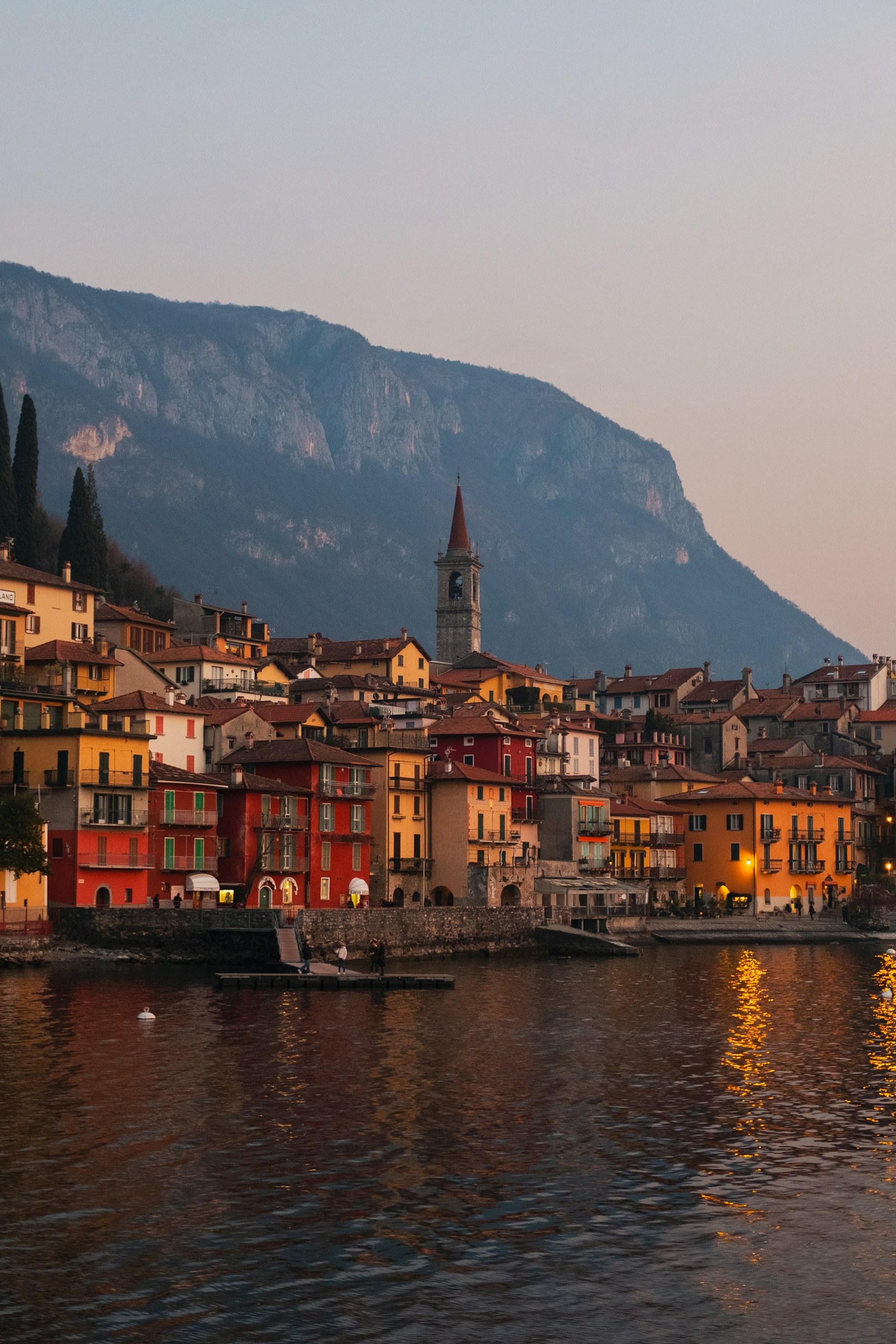
Where the three arms of the lake meet. Stepped lanes climb the slope, and walking out to Punta Spartivento opens up the water and the mountains at once.
For: long views over the lake, wandering the old town
Find it on the lake ↑Coloured houses press against the shore, and narrow lanes link the harbour to the waterside walk. From the town, the path to Villa Monastero lets a garden and the lake carry an afternoon.
For: walking by the water, time in a garden
Find it on the lake ↑A town on the western shore of the central lake, receiving travellers with a lakeside square and a promenade. Sit down for a coffee, watch the ferries come and go, and the rhythm of life here becomes clear.
For: coffee on the square, a slow walk by the shore
Find it on the lake ↑From Tremezzo to Lenno the shore strings together historic villas, gardens and villages. Villa Carlotta and Villa del Balbianello show two quite different characters of the estate.
For: historic villas, going from garden to garden
Find it on the lake ↑The southern gateway, where city meets lake. Walking from the old streets around the cathedral down to the waterfront, architecture, daily life and open water meet without ceremony.
For: city culture, wandering the old quarter
Find it on the lake ↑The city on the south-eastern arm, with a sharp mountain outline behind it. Following the shore and watching the peaks reflected in the water shows the side of Lake Como that lies closer to the hills.
For: mountain and lake scenery, a walk along the shore
Find it on the lake ↑What history left on the shore
Understanding Lake Como begins with understanding its architecture. These historic villas and gardens each hold a stretch of lakeside years.
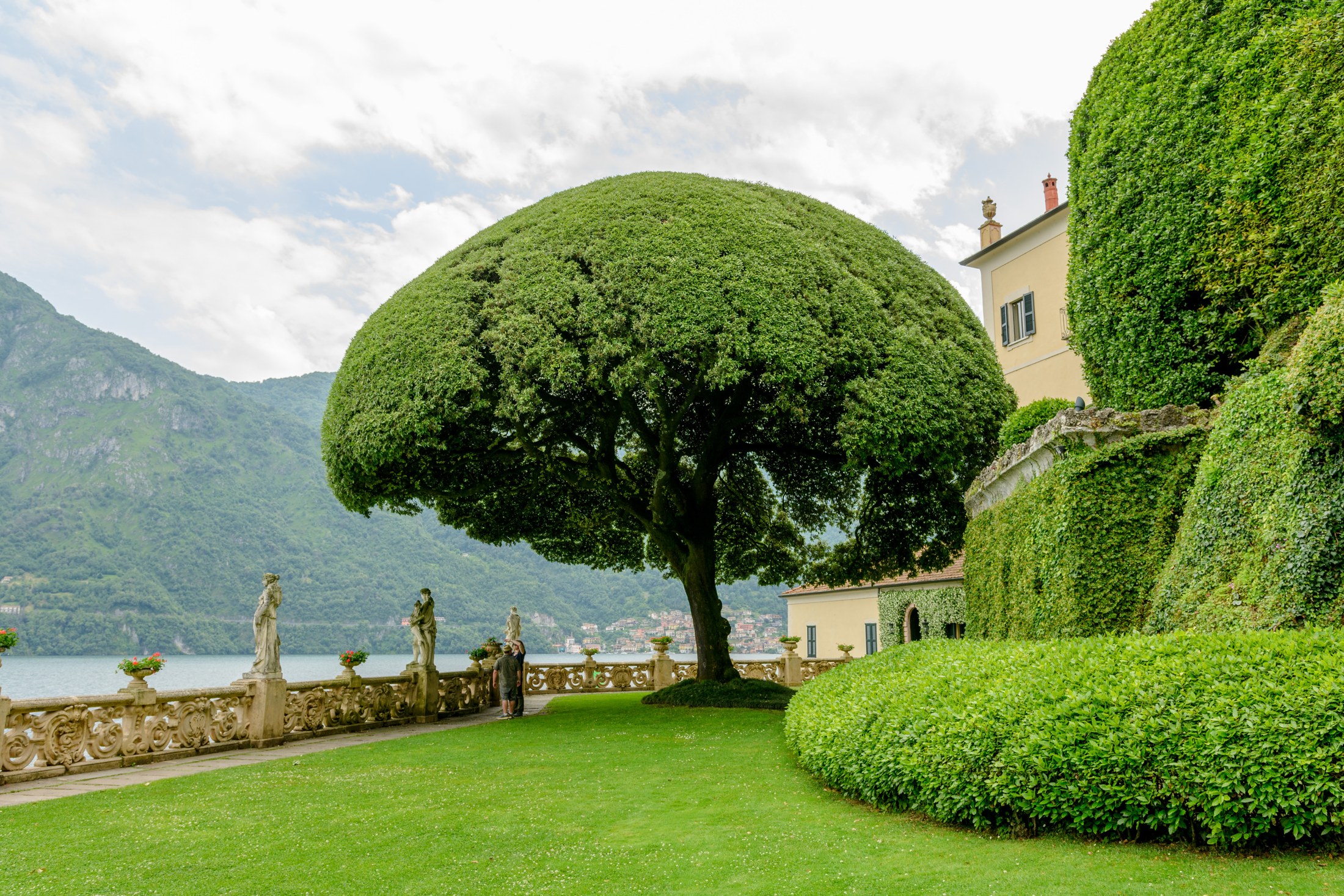
Villa del Balbianello
A headland reaching into the lake, finely kept greenery and an open loggia make this one of the most recognisable sights on Lake Como. It also keeps the collections and travel records of the explorer Guido Monzino.
Official site ↗An art collection and a botanical garden reflecting one another. Walking the garden paths, between sculpture, shade and the lake, you meet another kind of daily life in a historic house.
Official site ↗A botanical garden stretching along the eastern shore, threading building, planting and water into a single walk. House and garden together hold the marks of several different eras of living.
Official site ↗On the shore at Bellagio, an English landscape garden shows a restrained elegance through tree shadow, lawn and open water. Visits centre on the garden; the villa interior is not generally open.
Official site ↗The above are historic sights on Lake Como, not properties held by VILLA AURELAGO. For access, opening dates and booking, please refer to each site's own announcements.
Villa del Balbianello — Henry Kellner / Wikimedia Commons, CC BY-SA 4.0